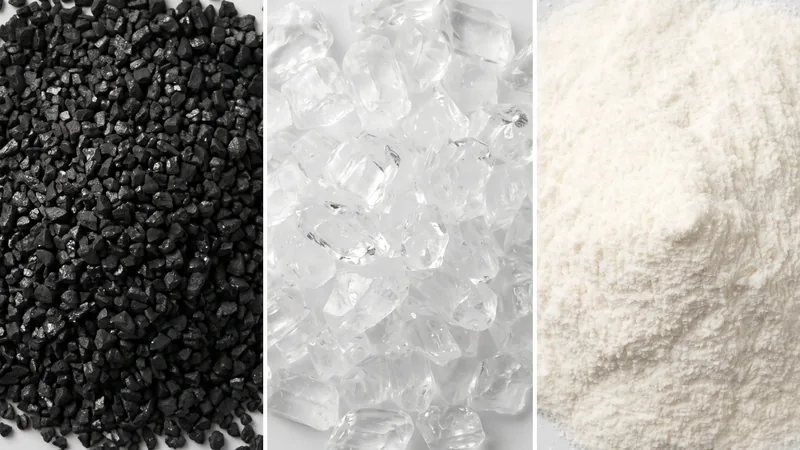
Short answer: every drop of tap water that goes into a koi pond needs its chlorine or chloramine removed first. For regular top-ups and trickle systems, a carbon filter is the easiest way. Use catalytic carbon if your water has chloramine. For one-off or emergency top-ups, dose sodium thiosulfate (about 4 g per 1,000 litres for every 1 mg/l of chlorine) or vitamin C. Then test, because carbon doesn't last forever.
Chlorine or chloramine? Find out first
UK water companies disinfect tap water with one of two things:
- Chlorine is the simpler one. It breaks down slowly if water is left to stand, and ordinary carbon removes it easily.
- Chloramine is chlorine bonded with ammonia. It's much more stable: it doesn't gas off if you leave water standing, and ordinary carbon struggles with it. My water has chloramine.
Your water company's website or customer line will tell you which yours uses. Levels are usually low, mostly 0.5 mg/l or less, but they can go up while the company is working on the pipes, so don't assume yesterday's reading still holds.
To check your water, use a total chlorine test, not a free chlorine one. A free chlorine test won't pick up chloramine. Anglian Water's advice for fish is to keep total chlorine below 0.1 mg/l.
How I do it: carbon on a timer
I run my top-up water through two big blue filter housings. One holds catalytic carbon, because my water has chloramine. The other holds bone char, for heavy metals.
That second housing matters more than people think. Most keepers only think about dechlorinating and forget about heavy metals. Tap water can also carry metals such as copper, often picked up from copper pipes, especially when water has been sitting in them, and koi are sensitive to copper. If you only dose ST, you're still putting whatever metals are in the water straight into the pond.
It's worth checking your local water data to be sure. Your water company publishes water quality figures for your area, usually searchable by postcode on its website, and will send you a report free if you ask. Look at copper and other metals as well as chlorine. Bear in mind that copper can also come from the pipes in your own house, so a filter stage is still a good safety net.
Rather than one big change, the water goes in on a timer six times a day at about 1.5 litres a minute. That adds up to roughly 15 to 20% of the pond a week. Spreading it out keeps the pond balanced: no sudden swing in temperature or chemistry, and nothing like a big hose top-up hitting the filter all at once.
A slow flow also suits the carbon. Chloramine needs a lot longer in contact with the carbon than chlorine does, so a gentle flow gets more out of it than blasting water through.
The catch: carbon wears out
Carbon gets used up. I found that out on a routine test, when I got chlorine readings in the pond. The carbon was spent, and chloramine was getting through.
What worried me most wasn't just the fish. It was my filter. Chlorine and chloramine are there to kill bacteria, and the good bacteria in your filter are bacteria too. A steady trickle of untreated water can knock them back without you noticing until ammonia or nitrite start creeping up.
Now I test the water coming out of the carbon, not just the pond. If chlorine shows at the outlet, it's time to change the carbon, before any of it reaches the fish.
Sodium thiosulfate: my emergency backup
I keep sodium thiosulfate (ST) in the shed for emergencies, such as spent carbon or a bigger top-up than usual. It's cheap, works almost instantly, and handles both chlorine and chloramine. It does nothing about heavy metals, though. The usual dose is about 4 g of ST crystals per 1,000 litres for every 1 mg/l of total chlorine.
One thing to know with chloramine: when ST breaks it down, the chlorine part is neutralised but the ammonia part is released into the water. A healthy filter will deal with a normal top-up's worth, but it's another reason not to put in huge untreated volumes at once.
A money-saving tip: a lot of branded pond dechlorinators are just sodium thiosulfate in a bottle, at many times the price. Check the label. If it's ST, you can buy the crystals and work out the dose yourself.
Work out your ST dose
Example: a 1,000 litre top-up with 0.5 mg/l total chlorine needs 4 × 1 × 0.5 = 2 g of sodium thiosulfate. The calculator does the sum for any volume and reading.
Open Sodium Thiosulfate CalculatorVitamin C: works, but costs more
Vitamin C also neutralises chlorine and chloramine, and I use it every now and then. It's a lot more expensive than ST, but it has things going for it. It's vitamin C, which koi need in their diet anyway, so it feels like a more natural choice than a chemical, and many keepers, me included, feel it does their fish some good. It's also the gentler option in another way: a study for water operators, summarised by Koi Organisation International, found vitamin C lowers dissolved oxygen less than sulfur-based dechlorinators like ST. Use sodium ascorbate rather than ascorbic acid if you can, because the acid form can nudge your pH down a little, especially if your KH is low.
Work out your vitamin C dose
Example: the same 1,000 litre top-up at 0.5 mg/l needs about 1.5 g of sodium ascorbate (2.8 mg per mg of chlorine, plus 10% to be safe).
Open Vitamin C CalculatorWhich should you use?
- Trickle or regular top-ups: a carbon filter, catalytic if you have chloramine, run slowly, with the outlet tested regularly.
- Emergencies or big one-off changes: sodium thiosulfate, dosed for the volume and your total chlorine reading.
- Small top-ups, or if you'd prefer a more natural option: vitamin C, at a higher price.
- Heavy metals: ST and vitamin C don't remove them. A filter stage such as bone char does.
- Leaving water to stand: only helps with chlorine, and only slowly. It does nothing for chloramine.
Whichever you use, plan your water changes with the trickle and water change calculator.
Frequently Asked Questions
Does leaving tap water to stand remove chlorine?
Chlorine slowly gasses off if water stands, but chloramine doesn't. Many UK areas use chloramine, so don't rely on standing water.
How do I know if my water has chloramine?
Ask your water company or check its website. To test, use a total chlorine test, because a free chlorine test won't show chloramine.
How often should I change the carbon?
It depends on how much water goes through it and your chlorine level. The reliable way is to test the water coming out of the carbon. When chlorine starts to show, change it.
Does sodium thiosulfate remove heavy metals like copper?
No. ST and vitamin C only neutralise chlorine and chloramine. To deal with metals such as copper, you need a filter stage like bone char.
Are pond dechlorinators just sodium thiosulfate?
Many are. Check the ingredients on the label. If it's sodium thiosulfate, buying the crystals is usually far cheaper.